Warm Nostalgia: The Vintage Baking Junk Journal Background
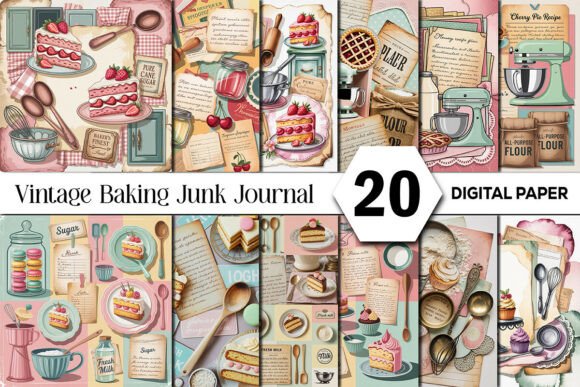
In a digital world saturated with sleek, minimalist vectors, there is a growing hunger for texture, warmth, and the tactile feeling of history. For designers, crafters, and brand strategists, the challenge often lies in finding assets that bridge the gap between digital precision and organic charm. The Vintage Baking Junk Journal Background collection answers this call perfectly. It is not merely a set of images; it is a curated atmosphere, offering a visual narrative steeped in the warmth of a country kitchen. With 20 printable digital backgrounds rendered at 300 DPI, this collection provides the high-resolution foundation necessary for professional-grade design, whether you are building a brand identity or crafting a personal keepsake.
Visual Characteristics: Capturing the Essence of a Bygone Era
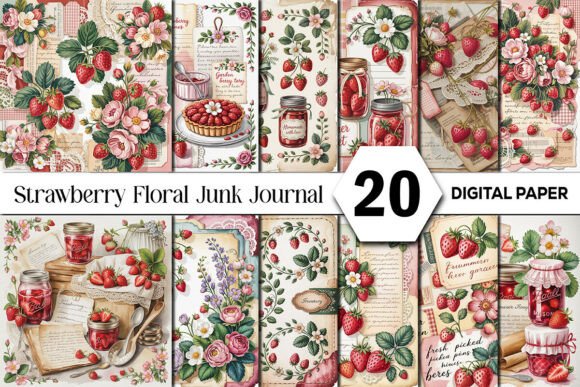
The true power of the Vintage Baking Junk Journal Background lies in its distinct visual personality. This collection moves beyond generic textures to offer charming vintage-style baking illustrations that tell a story. You will find delicate line drawings of pies cooling on windowsills, stacks of tiered cakes, handwritten recipe cards, and well-worn kitchen tools. The aesthetic is intentionally nostalgic, evoking a sense of comfort, home, and artisanal quality.
From a design perspective, these backgrounds function as a sophisticated display element. They are rich in visual texture, featuring the grain of old paper and the subtle imperfections that make digital art feel human. Unlike a standard serif font or sans serif font, which conveys information through letterforms, these backgrounds convey information through atmosphere. They set the stage for typography, allowing a simple script font or a bold handwritten font to pop against a textured, historical backdrop. The color palette typically leans toward sepia tones, muted pastels, and warm creams, ensuring they are versatile enough to support a wide range of color theories without clashing.
Strategic Applications for Modern Creatives
Understanding where to deploy the Vintage Baking Junk Journal Background is key to maximizing its value. This asset is a powerhouse for brand identity development, particularly for businesses in the culinary space. If you are a bakery owner, a food blogger, or a caterer, using these backgrounds in your packaging design or web design immediately communicates tradition and homemade quality. It suggests that your product is crafted with care, much like the illustrations themselves.
For editorial design and social media graphics, these backgrounds solve the problem of "blank canvas syndrome." Content creators and marketers can use them to create cohesive Instagram grids or Pinterest boards that feel curated and intentional. Imagine a "Recipe of the Week" series where every post sits atop a different variation from this set; the visual consistency builds brand recognition while the variety keeps the audience engaged.
Furthermore, the commercial use friendly license makes this a smart investment for entrepreneurs and publishers. You can incorporate these backgrounds into digital planners, printable wall art, or e-book covers without worrying about licensing restrictions. The instant download and JPG format ensure a seamless workflow, allowing you to drag and drop these assets into Photoshop, Illustrator, or Canva and start creating immediately.
Practical Guidance for Design and Typography
When integrating the Vintage Baking Junk Journal Background into your projects, readability must remain your north star. Because these backgrounds feature intricate illustrations, they are best used as a framing device or a backing layer rather than a direct surface for body text. If you are designing a flyer or a menu, consider using a solid color block or a semi-transparent overlay for your main content, allowing the vintage illustrations to peek out around the edges or serve as a header image.
Typography pairing is critical here. The organic, often whimsical nature of the baking illustrations pairs beautifully with a modern typography approach for contrast, or a complementary premium font for cohesion. For example, a clean, geometric sans serif font can provide excellent hierarchy and legibility for dates and times, while a flowing script font captures the personality of a handwritten recipe. Avoid overly ornate or "grunge" typefaces that might compete with the background's detailed linework. The goal is visual hierarchy; the background sets the mood, and the typography delivers the message.
Finally, consider the medium. At 12x12 inches and 3600x3600 pixels, these files are optimized for high-quality print. This makes them ideal for scrapbooking, junk journaling, and physical marketing collateral like postcards or tags. However, for web design, be mindful of load times. While the high resolution ensures crispness, you may need to optimize the file size for faster page speeds without sacrificing the 300 DPI quality for screen viewing. By treating these backgrounds as foundational design assets rather than just decoration, you can elevate your projects from simple layouts to immersive visual experiences.