Old-Fashioned Ladys Scrapbook Paper: Vintage Feminine Elegance
There's a particular quality to Victorian-era design that modern aesthetics often try to capture but rarely nail. It's not just about the florals or the lace—it's about the texture of the paper itself, the way colors have aged over time, and the quiet sophistication embedded in every detail. This Old-Fashioned Lady's Scrapbook Paper collection understands that distinction. With 12 high-resolution designs delivered in PNG format at 3600 × 3600 pixels and 300 DPI, these backgrounds offer more than decoration. They provide a foundation for projects that need to feel rooted in history while still looking polished and intentional.
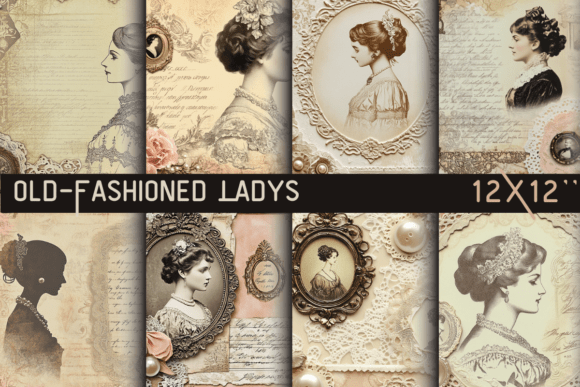
The visual language here draws directly from Victorian femininity. You'll find lace patterns that mimic hand-tatted edges, antique fashion illustrations of women in period dress, floral embellishments arranged with the deliberate asymmetry of a pressed flower album, and aged paper textures that suggest decades spent in a cedar chest. The color palette—soft cream, dusty rose, sepia brown, muted gold, antique beige—works together to create warmth without feeling washed out. These aren't pastel backgrounds that fade into irrelevance. They carry weight and presence, even while maintaining a gentle, romantic tone.
Understanding the Personality Behind the Design
What makes this collection worth considering for serious creative work is its consistency of character. Each of the 12 designs shares a cohesive visual personality, which means you can use multiple pages across a single project without them competing or clashing. The opaque, non-transparent backgrounds eliminate the guesswork involved with layering, making them straightforward to incorporate into both digital and print workflows. Whether you're designing a junk journal spread or building out a product line of vintage stationery, the files are ready to work with immediately.
The file sizes—ranging from 8 to 18 MB per page—reflect the detail packed into each design. These aren't compressed, low-resolution files that fall apart under scrutiny. At 300 DPI, they hold up beautifully in professional print settings, which matters when you're producing greeting cards, memory books, or planner inserts that customers will hold in their hands. The difference between a crisp print and a blurry one often comes down to source file quality, and this collection is built for that standard.
Where This Collection Truly Shines
Think about the projects where vintage feminine charm isn't just an aesthetic choice but a strategic one. Junk journals have exploded in popularity, and for good reason—they offer a tactile, personal experience that digital media can't replicate. The Old-Fashioned Lady's Scrapbook Paper designs serve as ideal base layers for these projects, providing a sense of age and authenticity that synthetic-looking digital papers struggle to achieve. The lace patterns and Victorian lady illustrations give each page a focal point without requiring additional embellishment, which saves time and keeps layouts clean.
For small business owners in the handmade or boutique space, these backgrounds translate directly into brand assets. A candle company, a tea brand, a vintage clothing reseller, a wedding stationery designer—any business that leans into romantic, nostalgic, or feminine positioning can use these designs across packaging inserts, thank-you cards, social media graphics, and website banners. The muted gold and sepia tones photograph well and maintain their character across different screens and print methods, which supports brand consistency without constant color correction.
Scrapbookers and memory keepers will find the collection particularly practical for themed albums—heritage pages, wedding memory books, baby books with a classic sensibility, or tribute projects honoring older family members. The aged paper textures provide an immediate sense of history, which means less time spent distressing or modifying backgrounds and more time focusing on storytelling through photos, journaling, and ephemera.
Practical Considerations for Using These Designs
When integrating any design asset into a project, context matters. These backgrounds carry a strong visual personality—they're distinctly vintage, distinctly feminine, distinctly ornate. That specificity is their strength, but it also means they won't suit every project. A tech startup's social media graphics or a minimalist brand's packaging would feel dissonant with Victorian lace patterns. The collection works best when the project's audience genuinely appreciates that aesthetic: women aged 30 and up who gravitate toward romantic decor, vintage fashion enthusiasts, genealogy hobbyists, or anyone building a brand around handmade, artisanal, or heritage values.
Layering text over these backgrounds requires some thought. The designs aren't overly busy, but they do have visual texture. For readability, consider using a clean serif or sans serif font for body text and reserving more decorative typography—script fonts, handwritten styles—for short headings or accent words. Adding a semi-transparent shape behind text blocks can also help maintain legibility without obscuring the background's character. This approach keeps the vintage aesthetic intact while ensuring your message comes through clearly.
For commercial use, always verify the licensing terms before incorporating these designs into products you intend to sell. Most digital paper packs come with personal and commercial licenses, but the specifics vary. If you're planning to use the Old-Fashioned Lady's Scrapbook Paper in printed products, digital downloads, or client work, confirm that the license covers your intended application. This small step prevents headaches down the line and protects both your business and your creative integrity.
Pairing These Backgrounds with Typography and Other Design Assets
The right typeface pairing can elevate these backgrounds from beautiful to purposeful. A refined serif font like Playfair Display or Cormorant Garamond echoes the elegance of the Victorian era without feeling costume-like. For contrast, pairing with a modern sans serif keeps the overall design grounded and accessible—think Montserrat or Raleway in lighter weights. Script fonts work well for monograms, titles, or accent phrases, but use them sparingly. Too much ornate typography on an already detailed background creates visual noise rather than harmony.
Beyond typography, consider how these backgrounds interact with other design elements. Gold foil accents, watercolor washes in coordinating tones, vintage botanical illustrations, and antique frame graphics all complement the collection's personality. The key is restraint. The backgrounds themselves are detailed enough to carry a layout, so additional elements should enhance rather than compete. A single focal image, a line of well-set text, and one of these backgrounds can be more impactful than a cluttered composition with dozens of decorative touches.
Making the Most of Your Investment
Twelve designs at this resolution and quality level offer genuine versatility. Rather than using each page once, think about how slight adjustments—cropping, rotating, recoloring with a simple hue shift—can extend the collection's usefulness across multiple projects. A background that works beautifully for a greeting card front might serve equally well as a planner cover or a digital desktop wallpaper with minimal modification. The PNG format maintains quality through these edits, giving you flexibility without sacrificing the crispness that makes these designs professional-grade.
Ultimately, the Old-Fashioned Lady's Scrapbook Paper collection fills a specific niche with intention and quality. It's not trying to be everything to everyone. It's designed for creators who understand that vintage femininity—when executed with care—carries emotional resonance that trendier aesthetics can't match. Whether you're building a brand, crafting a personal keepsake, or designing products for customers who value beauty and nostalgia, these backgrounds provide a reliable, visually cohesive starting point that respects both the craft and the audience.